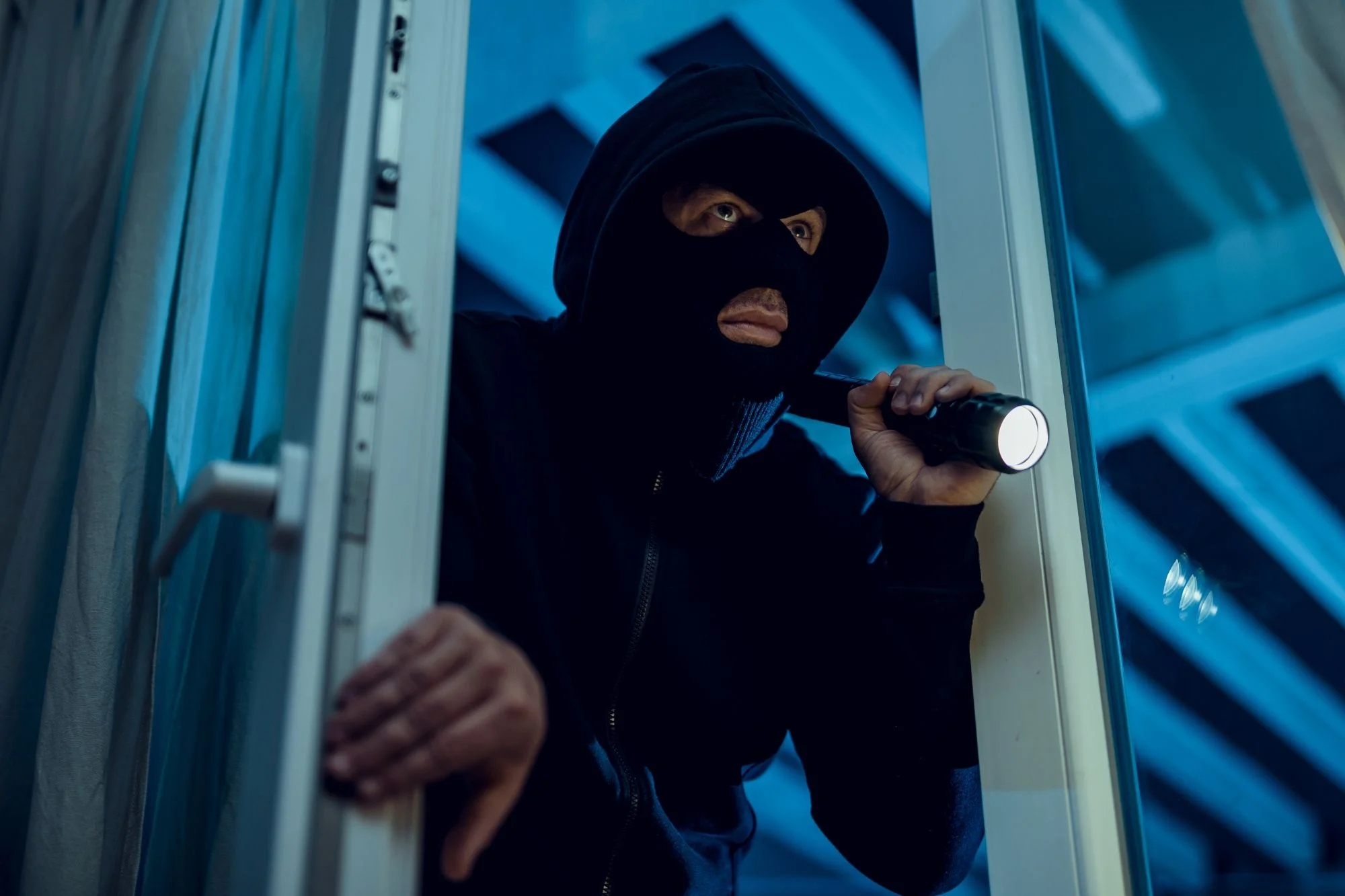
It’s a fair question to ask before spending money on security screens. Plenty of security products get marketed on fear rather than fact, so it’s worth looking at what actually happens when a burglar comes up against one.
The short answer is yes, but the reason why is more interesting than most people expect. It comes down to time, noise and risk, and how burglars themselves make decisions.
What the Data Says About Break-Ins in Australia
The numbers are worth knowing. According to the Australian Bureau of Statistics, an estimated 1.8 percent of Australian households, or around 196,600 homes, experienced a break-in during the 2024-25 financial year, with a further 217,500 households experiencing an attempted break-in.
The encouraging part of that data is the long-term trend. Household break-in rates have fallen from 2.7 percent in 2014-15 down to 1.8 percent a decade later, which lines up with the wider adoption of better home security across the country.
Of the households that were broken into, a large majority had something stolen and a similar number had property damaged in the process. That damage is often where the real cost sits, well beyond whatever was taken.
Why Burglars Target Some Homes and Skip Others
The Australian Institute of Criminology ran a study interviewing police detainees in Western Australia about how they actually plan and carry out break-ins. It’s one of the few pieces of Australian research that asks burglars themselves what stops them.
The findings back up what security professionals have said for years. Most burglaries are not planned in detail. Just under a third of offenders described their break-ins as planned, while the majority admitted the offence was spontaneous or opportunistic.
Two-thirds of the detainees said they typically got in through unlocked doors or windows rather than forcing their way in. Three-quarters said they took less than five minutes to enter a property once they’d decided to go ahead. If getting in takes longer than that, the risk of being seen or caught goes up fast, and most offenders simply move on.
Does a Security Screen Door Actually Deter Burglars?
This is where the research gets specific. When detainees in the AIC study were asked what would put them off targeting a property, the presence of security screens was named directly as one of the most effective deterrents, alongside working alarm systems, dogs and grilled windows and doors.
That matches the two ways a security screen door works. The first is visual. A property with a solid, well-fitted screen door signals that it’s going to take real effort to get in, and burglars are looking for the opposite of that.
The second is physical. A genuine security screen door, tested and certified to Australian Standard AS5039, is built to resist cutting, prying and forced impact. It turns a fast, quiet entry attempt into a slow, loud and risky one, which is exactly the outcome most opportunistic offenders are trying to avoid.

How Long Does It Take to Get Through a Security Screen Door?
This is the part that matters most. A compliant security screen door has to pass a series of independent tests before it can legally be called a security door, including knife shear, dynamic impact and jemmy testing that simulates a crowbar or screwdriver being used against the locks and frame.
None of these tests are quick to defeat by design. A door that meets AS5039 is built to hold up under sustained force, not just a single kick or a few seconds of prying. That extra time is the whole point.
Given that most burglars are working inside a five-minute window before they consider the risk too high, a screen door that adds even a couple of minutes to the job can be the difference between a burglar giving up and a burglar getting in.
Not Every Security Screen Offers the Same Level of Protection
This is also where a lot of homeowners get caught out. Not every door marketed as a security screen has actually been tested and certified. A basic flyscreen with a diamond grille pattern might look similar from the street, but it hasn’t been through any of the testing that proves it can resist a real attempt at forced entry.
If a screen door doesn’t carry compliance labelling confirming it meets AS5039, it’s technically a barrier door, not a security door, regardless of how it was sold. We’ve covered this distinction in more detail in our security door vs safety door guide. A barrier door simply doesn’t meet the Australian Standard, so it won’t hold up against someone determined to get through.
Where Break-Ins Actually Happen
Understanding entry points helps explain why security screens work as well as they do. Doors are consistently the most common point of entry in Australian residential burglaries, ahead of windows, with rear and side doors frequently targeted because they’re less visible from the street.
This is exactly why a security screen door on a back or side entry is often just as important as one on the front. Burglars actively look for entry points that let them work without being seen, and an unprotected back door or laundry entry is a common weak spot in otherwise secure homes.
Fitting security screens across every external door, not just the front entrance, closes off the easy options and forces an intruder to work harder for longer, right at the point where most give up.
Security Screens Work Best as Part of a Layered Approach
No single product guarantees a home will never be targeted, and it’s worth being upfront about that. Security screens are extremely effective, but they work best alongside other basic habits, like locking doors and windows even when you’re home, keeping valuables out of view from the street, and using outdoor lighting to remove hiding spots near entry points.
The AIC research backed this up too, with alarm systems and dogs also ranking highly among the things burglars said would put them off. A quality security screens installation does the heavy lifting as a physical barrier, while these other habits reduce the chances of a property being noticed in the first place.
Victoria Police list installing a security screen door as one of their official recommendations for securing a property, alongside a monitored alarm system, cameras and sensor lighting. When a police force and criminology research are pointing to the same solution, it’s a solid sign the advice holds up in practice.
Security Screen Doors for Gold Coast Homes
At Screen and Blind Master, every security door we install is Prowler Proof, manufactured to meet AS5039 with fully welded corners and a construction that’s built to handle real forced entry attempts, not just look the part.
For Gold Coast homes, that matters even more given how often doors and windows are left open to make the most of the coastal climate. A compliant security screen door lets you keep that airflow and lifestyle without leaving your home exposed while it’s open.
If you’re weighing up whether a security screen door is worth it for your home, the research is fairly clear. It won’t make a break-in impossible, but it makes your home a much harder, slower and riskier target, and that’s usually enough to send a burglar elsewhere.
Contact us today for a free in-home consultation and we’ll help you find the right security screen doors for your home.